
Tiger Nuts (Aya) in Baby Cereal: Nutrition Facts, Safety and Allergy Notes
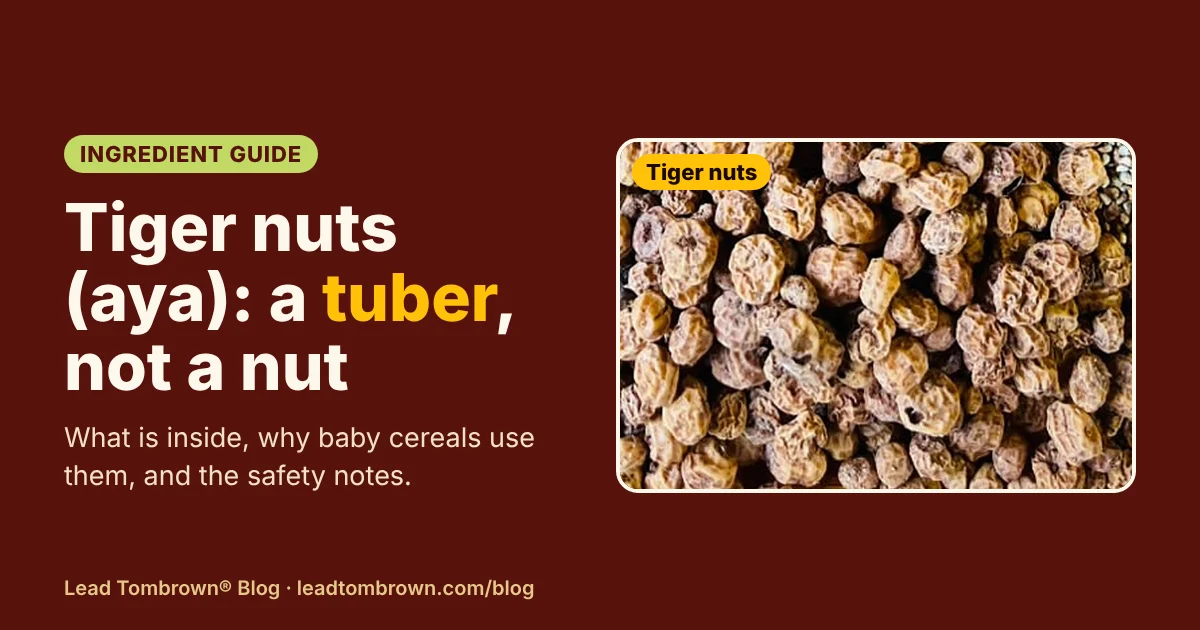
Tiger nuts, called aya in Hausa and ofio in Yoruba, are a familiar snack and drink ingredient across Nigeria. They are also used in some baby cereals for their natural sweetness. This article explains what tiger nuts are and what research says about them. It is general information and not medical advice.
What are tiger nuts?
Tiger nuts (Cyperus esculentus) are not true nuts. The scientific literature describes them as small tubers that grow underground. They taste mildly sweet and have a slightly chewy, nutty flavour. They are eaten raw, dried, roasted, ground into flour, or soaked and pressed into a drink.
What is in tiger nuts? The numbers
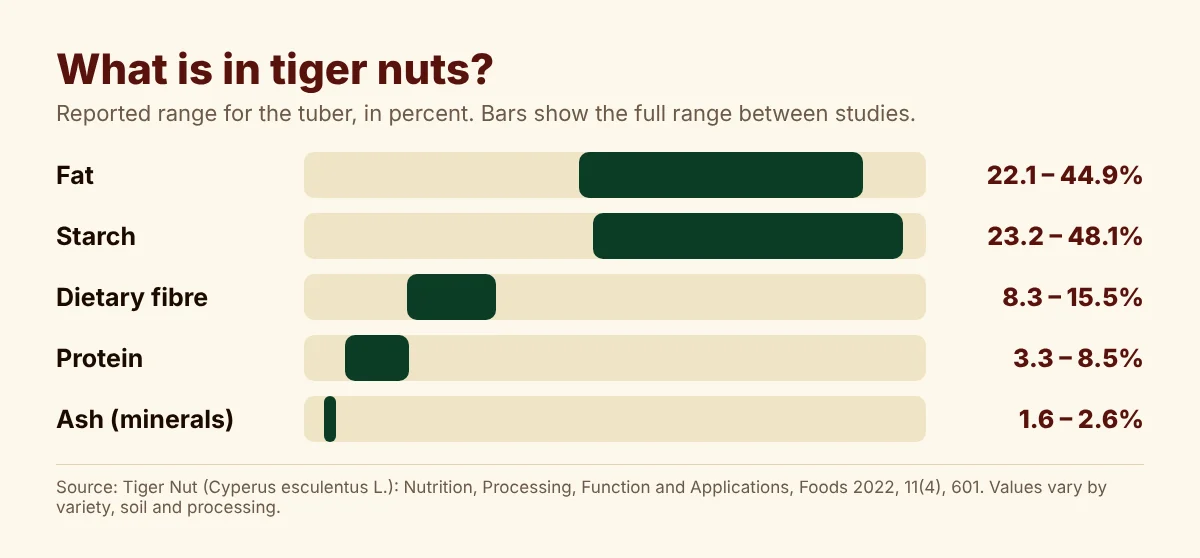
A 2022 scientific review on tiger nut nutrition, processing and uses in the journal Foods reports these ranges for the tuber:
| Component | Reported range |
|---|---|
| Fat (lipids) | 22.14 to 44.92% |
| Starch | 23.21 to 48.12% |
| Dietary fibre | 8.26 to 15.47% |
| Protein | 3.28 to 8.45% |
| Ash (minerals) | 1.60 to 2.60% |
The wide ranges happen because tiger nuts vary by variety, soil and processing. The review also names minerals present in tiger nuts, including potassium and magnesium, and notes that the protein is limited in an amino acid called methionine, so tiger nuts work best alongside other protein sources such as legumes and cereals.
Why are tiger nuts used in baby cereal?
Tiger nuts taste naturally sweet, so a cereal maker can use them for flavour without adding sugar. They also add fibre and energy. In a blend, they sit alongside grains and legumes that supply other nutrients. No single ingredient provides everything a growing baby needs, which is why blends are common.
Safety notes
- Allergy. Any food can cause allergy in some children. If your baby has a history of food allergy or severe eczema, talk to your child health worker before starting a new food.
- Hygiene and storage. The same review notes that tiger nut milk has a high microbial load and a short shelf life. That is one reason hygiene matters. Dry products should be kept in a clean, closed container in a cool, dry place, and never left in damp conditions.
- Be careful with claims. The authors say that many reported medicinal and functional effects of tiger nuts still need confirmation in human studies. Be cautious of anyone who promises that tiger nuts cure or prevent illness.
- Start small. The WHO advises starting complementary foods at about 6 months in small amounts and increasing gradually.
Tiger nuts in Lead Tombrown®

Lead Tombrown® uses tiger nuts and dates for natural sweetness, so no sugar is added. The full ingredient list is yellow corn, guinea corn, soyabeans, millet, groundnuts, dates and tiger nuts. Allergy caution: it contains soybeans, tiger nuts and groundnuts. It is NAFDAC registered (A8-115652L) and meant for babies from 6 months. To find a distributor, visit the Lead Tombrown buy page.
Frequently asked questions
Are tiger nuts really nuts?
No. They are small tubers from a plant related to sedges. That is why they are often called tiger nuts only by name.
Is aya the same as tiger nut?
Yes. Aya is the Hausa name for tiger nuts. In Yoruba they are called ofio.
Can babies eat tiger nuts?
Babies from about 6 months can eat soft, fully cooked, smooth complementary foods. Whole or hard pieces are a choking risk, so tiger nuts for babies should be finely ground in a cereal. Check with your child health worker if your baby has allergy risk.
Are tiger nuts naturally sweet?
Yes, they have a mild natural sweetness, which is why some cereals use them instead of added sugar.
How much fibre do tiger nuts have?
The scientific review reports 8.26 to 15.47% dietary fibre in the tuber. Values vary by variety and processing.
Sources
- Tiger Nut (Cyperus esculentus L.): Nutrition, Processing, Function and Applications, Foods 2022, 11(4), 601
- WHO: Infant and young child feeding fact sheet
Please note: This article is general information, not medical advice. Every baby is different. For questions about your baby's health, feeding or allergies, speak to your doctor or child health worker. The WHO recommends exclusive breastfeeding for the first 6 months and continued breastfeeding up to 2 years or beyond alongside suitable foods.
Looking for Lead Tombrown® near you?
Choose your size, tell us your location, and we connect you with the nearest distributor. NAFDAC registered (A8-115652L).