Soybeans in Baby Cereal: Protein, Processing and Allergy Facts
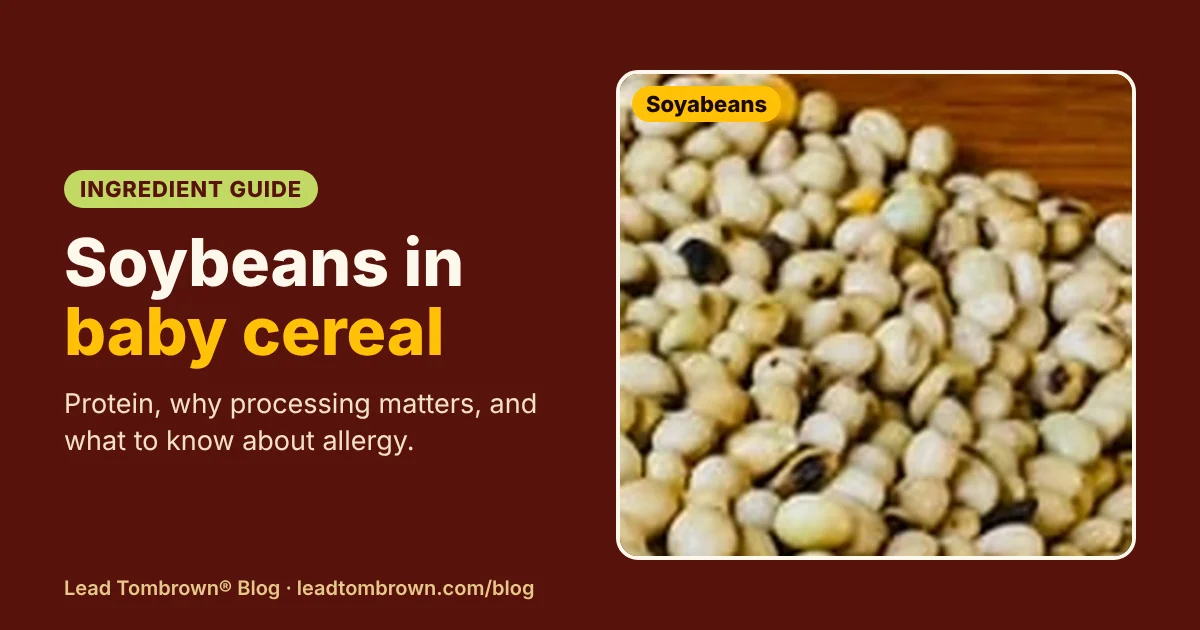
Soyabeans are a key ingredient in many Nigerian tom brown recipes. They are cheap, widely grown, and rich in protein. This article explains what soybeans contain, why processing matters, and what to know about allergy. It is general information, not medical advice.
What are soybeans?
Soybeans are legumes, in the same plant family as groundnuts and beans. In Nigeria they are used for soy milk, flour and cereals, and in many tom brown recipes.
Soybean nutrition facts
A 2024 review in Discover Food on soybean protein digestibility and processing reports that soybeans contain about 40 g of protein per 100 g (with other legumes generally at 20 to 30 g per 100 g), or around 35% protein on a wet basis. It reports about 17% oil and about 31% carbohydrate, of which a large part is dietary fibre.
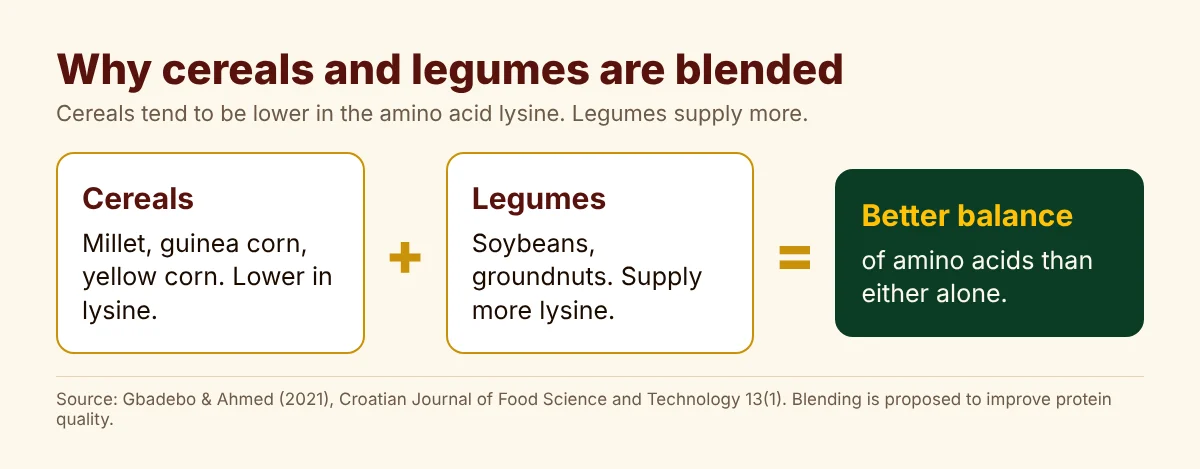
That is why soybeans are used to raise the protein content of cereal blends. A 2021 study on guinea corn meal enriched with soybean and groundnut for infant feeding notes that cereals are deficient in lysine, and that blending them with legumes is proposed to improve protein quality.
Why does processing matter?
Raw soybeans contain natural compounds called anti-nutritional factors, including:
- Trypsin inhibitors, which can make it harder to digest protein. The review lists total levels of 2 to 6 mg per gram.
- Phytic acid (phytate), which can reduce mineral absorption.
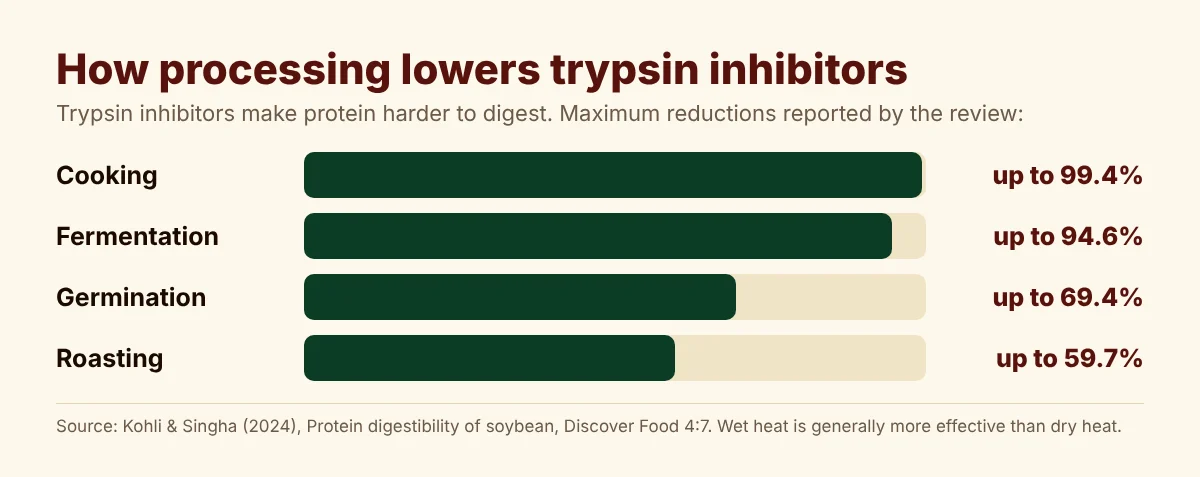
Heat treatment reduces these. The review reports maximum reductions in trypsin inhibitors of up to 99.4% with cooking-type treatments, 94.6% with fermentation, 69.4% with germination and 59.7% with roasting. It adds that wet heat is generally more effective than dry heat. Some studies found roasting improved protein digestibility by 3.2 to 15%, while very high temperatures reduced it.
This is why soybeans in a baby cereal should be properly processed and the porridge thoroughly cooked, as the preparation instructions say.
Allergy: what parents should know
Soybean is one of the foods that can cause allergy in some children. If your baby has eczema, a family history of food allergy, or has reacted to a food before, speak to your doctor or child health worker before starting a cereal that contains soy. If a baby develops hives, swelling, repeated vomiting or breathing difficulty after eating, stop feeding and seek medical help.
Soybeans in Lead Tombrown®
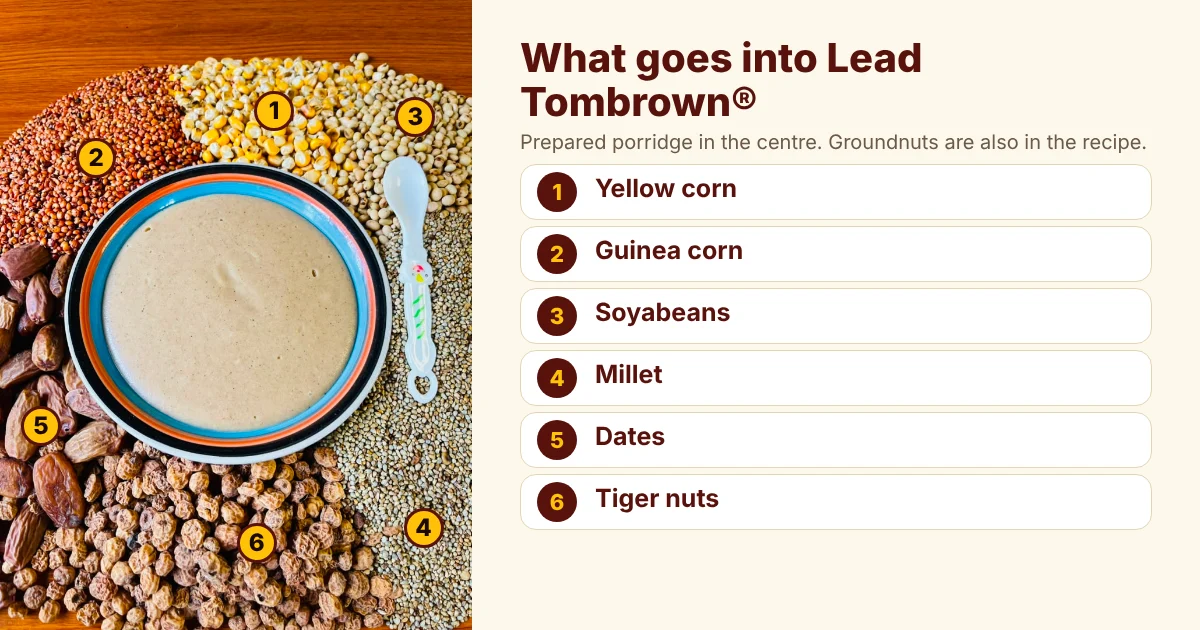
Lead Tombrown® is made from yellow corn, guinea corn, soyabeans, millet, groundnuts, dates and tiger nuts, with no added sugar. Allergy caution: it contains soybeans, tiger nuts and groundnuts. It is NAFDAC registered (A8-115652L) and meant for babies from 6 months. To find a distributor near you, visit the Lead Tombrown buy page.
Frequently asked questions
How much protein do soybeans have?
A 2024 review reports about 40 g of protein per 100 g, and around 35% on a wet basis. This is higher than most other legumes.
Is soy safe for babies?
Soy is commonly used in complementary foods, but it can cause allergy in some children. Ask your child health worker if your baby has eczema or a family history of food allergy.
Why are soybeans roasted before milling?
Heat reduces natural compounds that make soybeans harder to digest. The review reports that heat treatment lowers trypsin inhibitors, and that moderate roasting can improve digestibility, while very high heat can reduce it.
Why are soybeans mixed with cereals like millet and guinea corn?
Cereals tend to be lower in the amino acid lysine, and legumes supply more. Blending them gives a better balance of amino acids than either alone.
Sources
- Kohli and Singha (2024): Protein digestibility of soybean: how processing affects seed structure, protein and non-protein components, Discover Food 4:7
- Gbadebo and Ahmed (2021): Proximate composition and sensory evaluation of Guinea corn meal enriched with soybean and groundnut for infant feeding, Croatian Journal of Food Science and Technology 13(1)
- WHO: Complementary feeding
Please note: This article is general information, not medical advice. Every baby is different. For questions about your baby's health, feeding or allergies, speak to your doctor or child health worker. The WHO recommends exclusive breastfeeding for the first 6 months and continued breastfeeding up to 2 years or beyond alongside suitable foods.
Looking for Lead Tombrown® near you?
Choose your size, tell us your location, and we connect you with the nearest distributor. NAFDAC registered (A8-115652L).